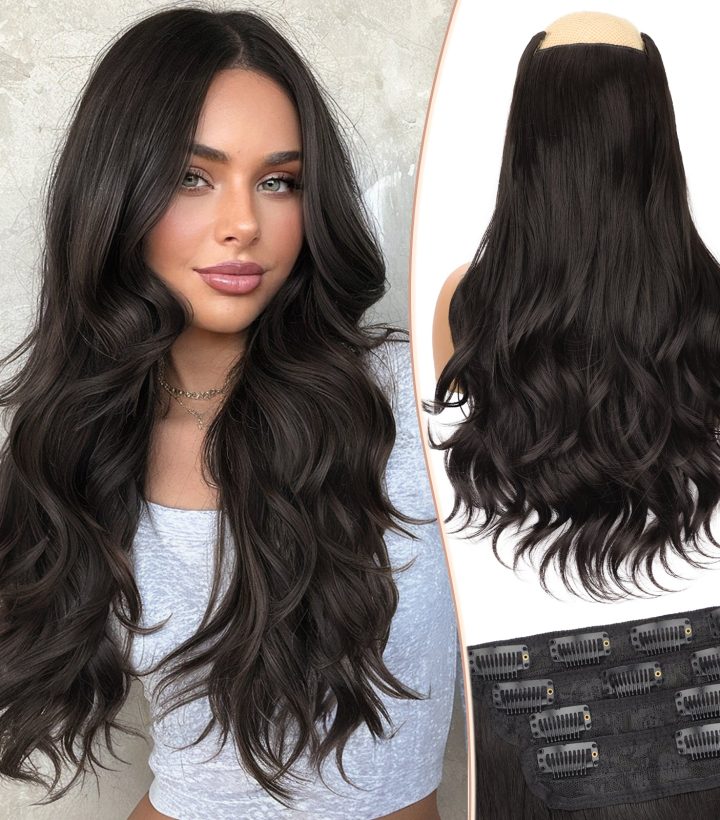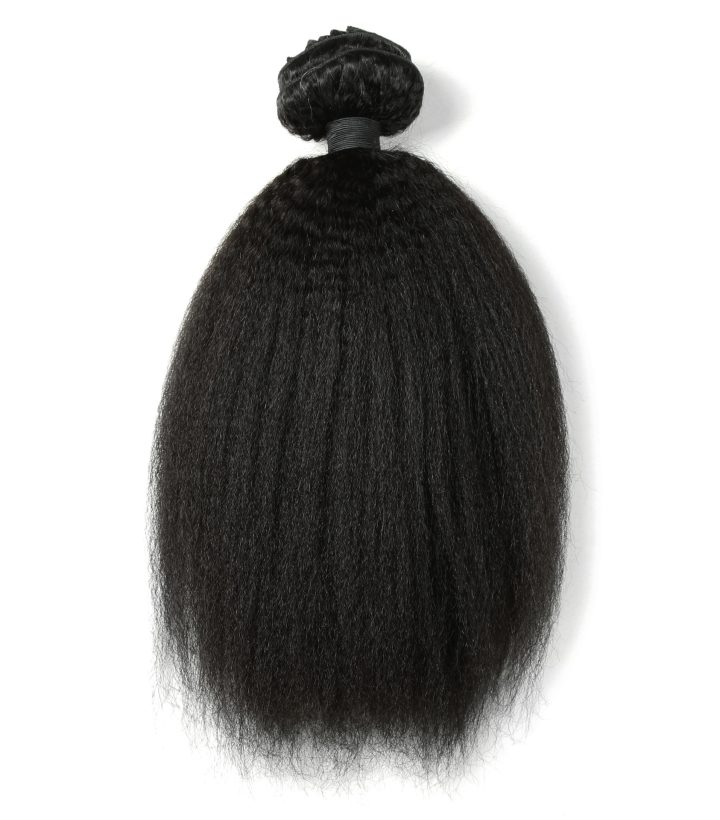
A clip-in set description becomes useful when you can see exactly what the pack contains. Piece count, weft width, weight and length should refer to the same existing listed set and any listed variant. Before comparing clip-in extension options, ask for a piece-by-piece specification that you can carry through the quotation, sample review and order confirmation.
This guide helps you confirm an existing listed product. If a set does not meet your needs, compare other existing listed sets and confirm their contents and availability. All values in the layout record should come from the supplier’s confirmation for the selected listed set and variant; availability must also be confirmed.
Map the pieces before comparing the totals
Start by asking what the supplier counts as one piece. Does the stated count cover only the wearable wefts, and are spare clips or other accessories listed separately? Give each piece a reference so that the pack description and any supporting layout can be matched.
If your shortlist includes a small accent piece or one wider panel, compare single-clip accents and one-piece extensions first. The comparison shows which dimensions to check for each format.
For every weft, request its width, the unit used, the number of attached clips and the clip type. Ask where the width measurement begins and ends. If several pieces are described as identical, have the supplier confirm their quantity and shared dimensions. A piece count alone leaves these details unresolved; record the layout before deciding whether two offers describe comparable sets.
Four wefts and eleven clips in a listed set
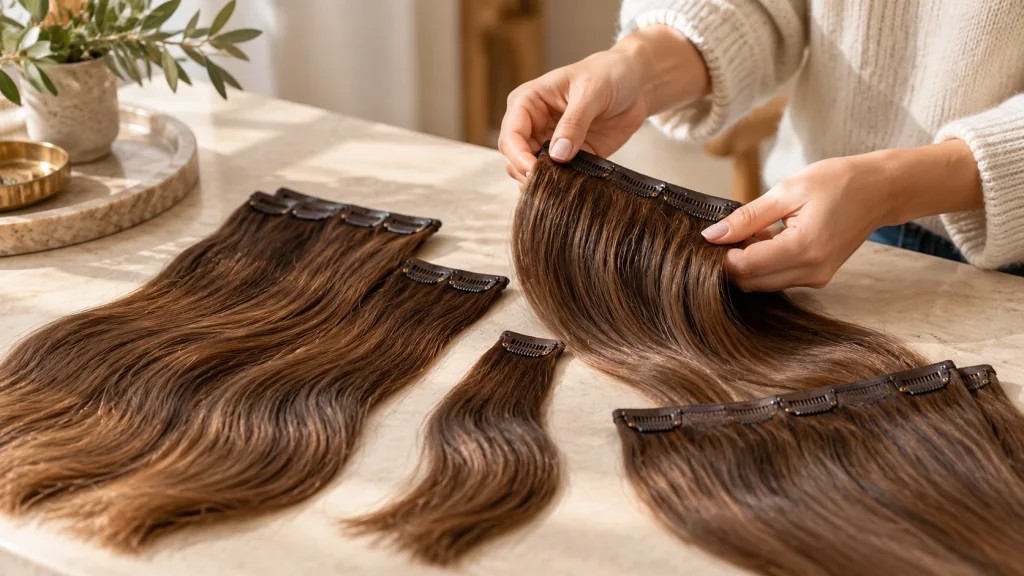
The catalog lists NS-EX-030 with two 4.5-inch wefts carrying two clips each, one 5.5-inch weft with three clips, and one 6.5-inch weft with four clips. The listing adds up to four wearable wefts and eleven attached clips. Use the widths and clip counts together to check whether a quote describes the same layout.
The recorded specification for the dark brown 20-inch option associated with NS-EX-030 gives this four-weft layout and a weight of 200 g. It does not specify whether that weight includes the clips or packaging. Before comparing quotes, confirm that the offered set matches this option and ask what the stated weight includes.
For a halo-style item that combines wire and clips, compare wire adjustment and repositionable clip layouts separately before treating attachment counts as equivalent.
When the count does not identify the wearable pieces
A specification reading “9pcs clips” does not by itself establish a nine-weft layout. For NS-EX-037, request a labeled photograph showing all included wefts, then record each weft’s width and attached clip count. Keep the total number of wearable wefts separate from the total number of clips. Confirm the selected length and option before using a recorded model specification for the offered set.
Define what each weight includes
Ask for both the total set weight and the weight of each piece. Have the supplier state whether these figures cover hair only or the assembled pieces, including clips and other construction components. Record packaging weight separately if it is supplied.
Then reconcile the figures using the same weight basis. For a grouped entry, multiply the per-piece weight by the quantity before adding it to the set total. If the numbers differ, ask whether rounding, an omitted piece or different measurement scopes explain the gap. Request the supplier’s stated measurement tolerance rather than choosing your own allowance.
Worked example: reconcile clip-in set weight
Suppose a four-piece set contains two assembled wefts at 25 g each and two at 15 g each. The assembled set totals (2 × 25 g) + (2 × 15 g) = 80 g. If a second quote gives 80 g for hair alone, ask the supplier to confirm its assembled weight before comparing the quotes. This example uses hypothetical figures.
Clarify natural and stretched length
Ask how the supplier defines natural length and stretched length for the selected listed texture, if applicable. Does the natural measurement show the piece hanging without extending its waves or curls? How is the piece positioned and extended for the stretched measurement? Ask for the starting point, ending point and unit in each case.
Also establish whether the quoted length applies to every piece, the longest piece or another reference. If only one measurement is available, label its method explicitly and leave the other unconfirmed. Avoid comparing length figures until their methods match. Use the hair length and base measurement guide to keep the measured dimension and reference points clear. The site’s hairpiece selection guide identifies natural-versus-stretched measurement as a detail to confirm for clip-ins.
Use a compact set-layout record
Use the following fields to request confirmation of the selected listed set’s existing pack contents. Repeat the piece entry for each different piece or confirmed identical group; keep unanswered fields marked “To be confirmed.”
- Set reference: [YUKI product code or page link]; [listed color and texture variant, if shown]; [confirmation date].
- Piece entry: [piece ID]; [quantity]; [weft width and unit]; [clip count and type]; [weight per piece and unit]; [weight includes].
- Length for this entry: [natural measurement]; [stretched measurement]; [unit]; [measurement points and method].
- Set reconciliation: [total wearable pieces]; [sum of piece weights]; [supplier’s stated total and weight basis]; [tolerance]; [separately listed accessories].
- Supporting references: [labeled layout]; [actual color reference]; [sample reference, if agreed]; [supplier confirmation date].
Keep the piece IDs unchanged when the supplier replies. This lets you identify exactly which entry needs clarification instead of restarting the whole inquiry.
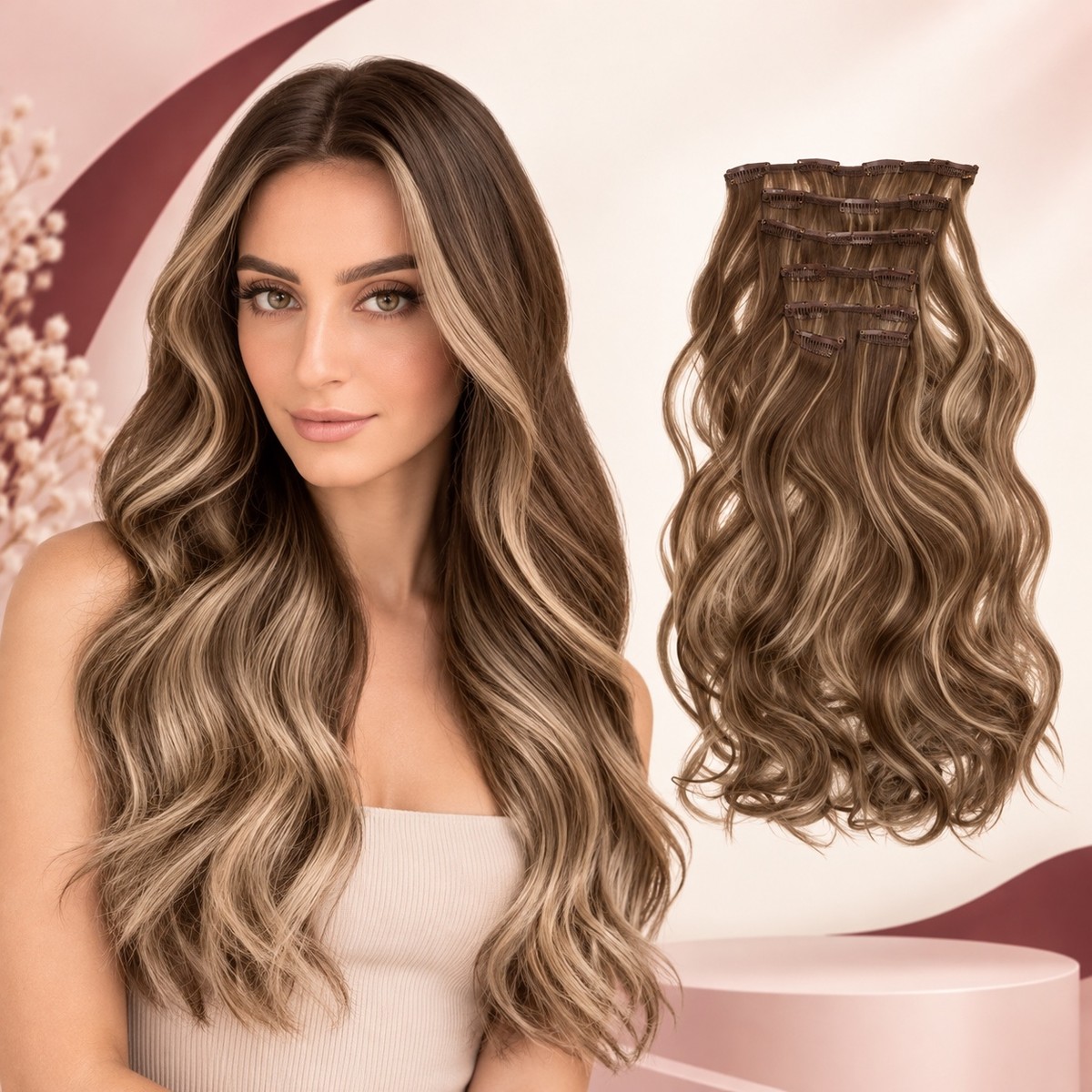
For a mixed-shade example, use the Soft Wave Mixed-Shade Extension Set (NS-EX-024) as the reference for this checklist. Its catalog image shows long brown-to-blonde waves alongside a separate multi-weft display. Confirm which pictured pieces are included in the listed set, their widths and clip layout, the exact shade reference, and the measurement method before comparing a quote. The image alone does not establish piece count, material, length, weight or current availability.
Carry the confirmed record into the order
Before sample review, use the material and care instruction checklist to record the instructions supplied for that exact set.
If a sample is available, compare it against the confirmed record for the selected listed set and document any mismatch. Do not accept a mismatched sample as the order reference; ask for clarification. If the set does not meet your needs, consider another existing listed set and confirm its availability. Request an actual color reference for the selected listed option, and keep unresolved details visible before ordering. The hairpiece color comparison checklist explains how to keep shade questions tied to the selected option.
After an order arrives, use the confirmed layout to check received packs, sets and individual pieces. Record incomplete sets separately so that a total piece count does not hide a missing component.
YUKI’s product support helps buyers confirm details of existing listed products, ask about samples and organize order details. The current supplier must confirm the exact listed product’s specifications and availability. Obtain price, shipping, timing and return terms in writing before placing an order, with the confirmed set-layout record attached or clearly referenced.
Apply the set-layout checklist to a specific style: view the Dark Brown Layered Four-Piece Clip-In Extension Set (NS-EX-030) or view the Natural Black Spiral Clip-In Set (NS-EX-009). These are separate listed products; do not transfer a piece count, width or weight from one to the other.
Quick questions about clip-in extension sets
What should a clip-in set’s piece count include?
Ask whether the count refers to wearable wefts only or also includes separately listed accessories. Request the quantity for each weft group and keep spare clips or other items separate in the written pack record.
Should the stated set weight include the clips?
Confirm the weight basis for the exact set: hair only, assembled wefts with clips, or another stated scope. Record packaging separately if supplied, and compare totals only when both values use the same basis.
Why can two stated extension lengths look different?
Length methods can differ, especially for wavy or curly pieces. Ask whether the value is measured naturally or stretched, which points are used, and whether it applies to every piece or only the longest one.
Use the WhatsApp inquiry button on the product page you choose to send its name, SKU and URL, plus your quantity, destination country and sample interest. Add your set-layout questions and mark unanswered measurements clearly so they can be checked for that exact item.