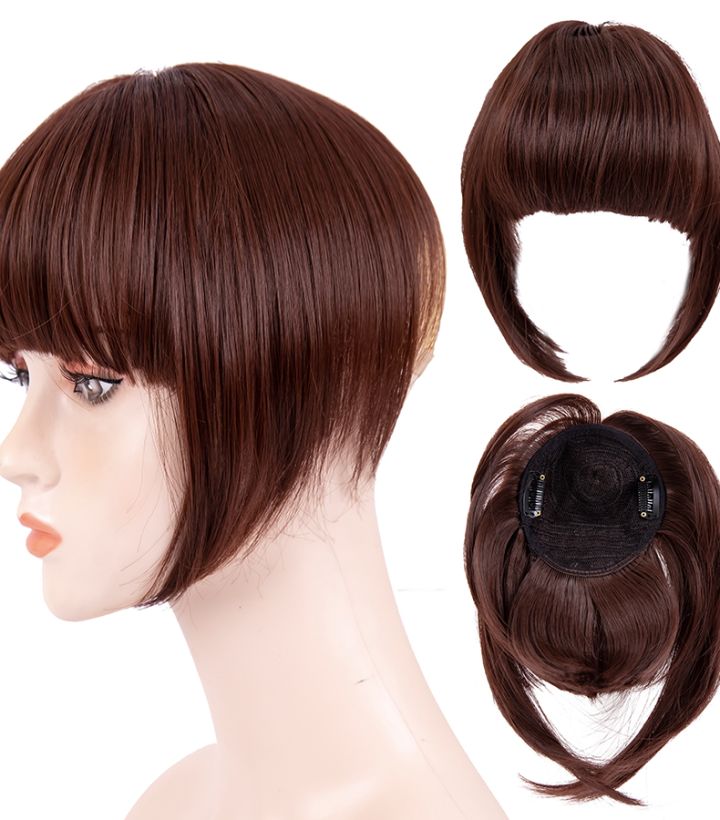
Conceptual illustration; not a photo of YUKI stock, a customer order, or a listed SKU.
When requesting a repeat order, use the earlier product reference as a starting point and ask for fresh confirmation of the exact existing item. A saved page, old quote or retained sample does not establish today’s availability, price or terms. Keep the previous reference and the new confirmation side by side.
Recover the exact item reference
Find the product name, SKU, page URL and selected listed option from the earlier inquiry or order. If you retained a sample, keep its label and review date with that record. Avoid identifying the item only by a screenshot or a phrase such as “the brown topper.” Similar-looking pieces can have different bases, attachments or included components.
As a catalog example, CI-009 Rounded Two-Clip Bob Fringe Topper, NS-TP-022, identifies a particular listed item with a rounded mesh crown base and two pressure clips. Its pictured reddish-brown appearance is a visual description, not a manufacturer shade code. Keep all of those references together when asking about that item. This example does not imply that a previous order has been placed.
Ask what is currently confirmed
- Is the same listed SKU and pictured option currently available for the requested quantity?
- Does the current description still match the earlier confirmed attachment and base?
- Are the included wearable pieces and accessories unchanged?
- Which dimensions, materials and care instructions are confirmed for the current item?
- Are any earlier questions still unresolved?
For NS-TP-022, the CI-009 supplier model page lists 8 inches. Keep that value in the reference column until the supplier confirms the measurement and its start and end points for the current reddish-brown two-clip option. Record the confirmed length and date alongside the earlier order or sample reference.
Handle differences as a decision, not an automatic substitution
If the same item cannot be confirmed, ask which existing listed alternative is being proposed. Give that alternative its own product reference and compare its features separately. Do not describe it as identical just because the hairstyle looks similar.
Use the toppers and volume pieces category to review existing alternatives. Compare the selected candidates against the actual need, such as attachment layout or coverage, and resolve differences before deciding. This is a selection among existing items, not an offer to reproduce or customize a discontinued piece.
Keep a change log with the new quotation
Make a short record with four fields for each important detail: previous confirmed value, current confirmed value, evidence date and decision. Mark “unchanged” only after it has been reconfirmed. If a new sample is offered, agree what it represents and which open questions it should resolve before treating it as the repeat-order reference.
Record new price, currency, quantity, shipping and payment terms separately from the product comparison. A previous commercial offer is historical information; it should not be carried into a new order as if it were still valid.
Use the hairpiece quote comparison checklist to line up the new offer and the prior record by SKU, pack unit and included charges. Ask the supplier to explain any change in the quoted unit before comparing unit prices.
What should I send in a repeat-order inquiry?
Use the WhatsApp inquiry button on the exact product page. Include its product name, SKU and URL, your selected listed option, requested quantity and destination country. If you have an earlier order or sample reference, identify it without including payment credentials or unnecessary personal data. State which features must be compared and ask for current availability and quotation terms.
A concise request could read: “Please confirm current availability for this listed SKU and option, quantity [number], destination [country]. My earlier item reference is [reference]. Please identify any differences in the attachment, base and included contents before quoting.” This is an example request, not a record of a real customer inquiry.
Use the selection checklist for the underlying specification questions. Keep the final written confirmation with the new order reference so a later review can distinguish what was previously known from what has now been reconfirmed.