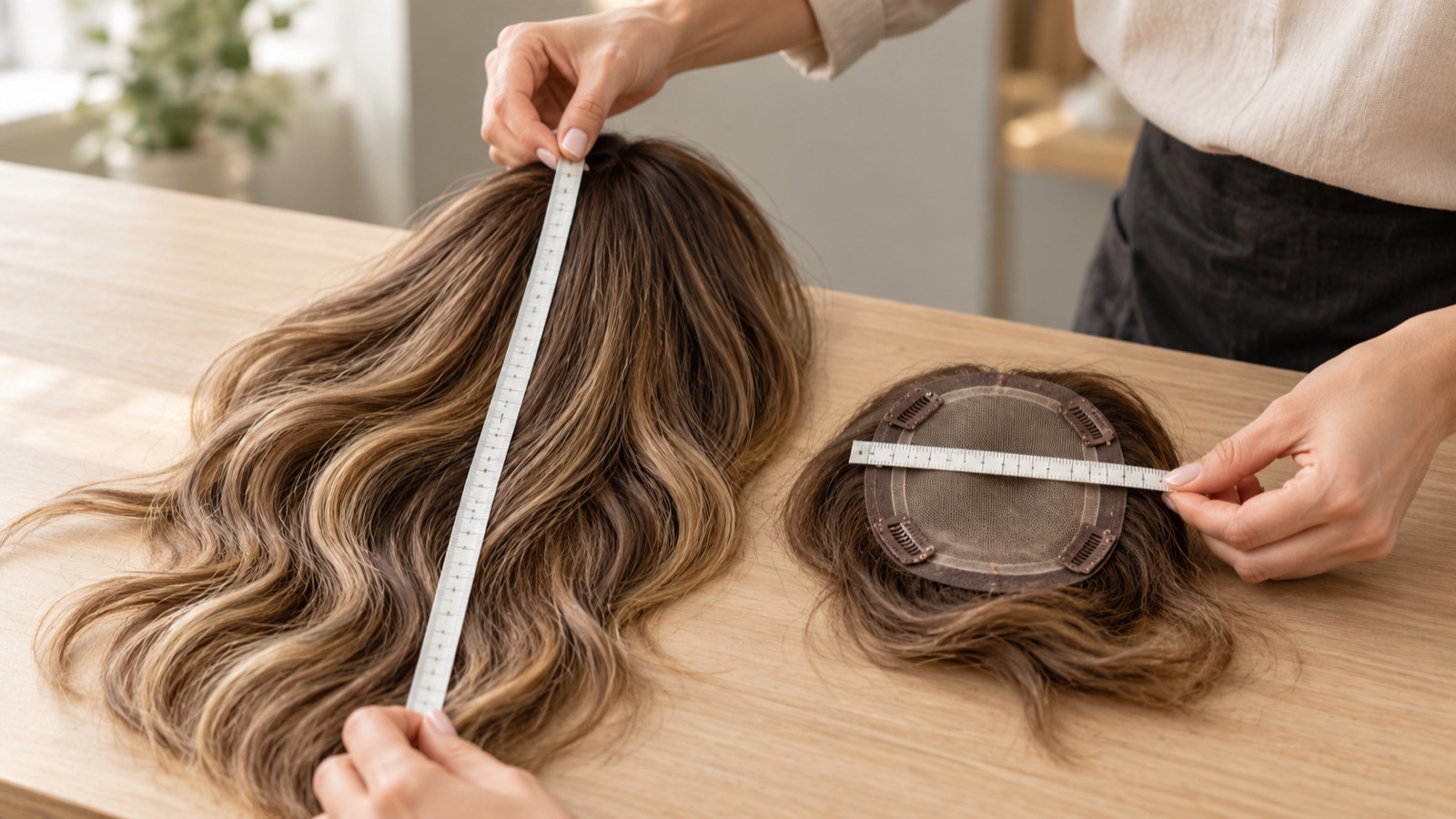
Conceptual illustration; not a photo of YUKI stock, a customer order, or a listed SKU.
A number on a hairpiece listing is useful only when you know what was measured. Hair length, base width and the height of a finished puff answer different buying questions. Record the measurement type, start and end points, unit and measuring method before comparing two existing catalog items.
Separate the three measurements
- Hair length: ask where measurement starts and ends, which section is measured and whether the hair is measured in its displayed shape or extended.
- Base dimensions: record the width and front-to-back depth of the support underneath the hair. These are not the width of the hairstyle.
- Overall size: record the finished item’s width or height as shown. A puff’s overall height is not the length of an individual fiber.
Do not compare a base measurement with a hair-length option, even if both are written in inches. Convert units only after identifying the same measurement: one inch equals 2.54 centimeters. Conversion does not resolve an unclear measuring method.
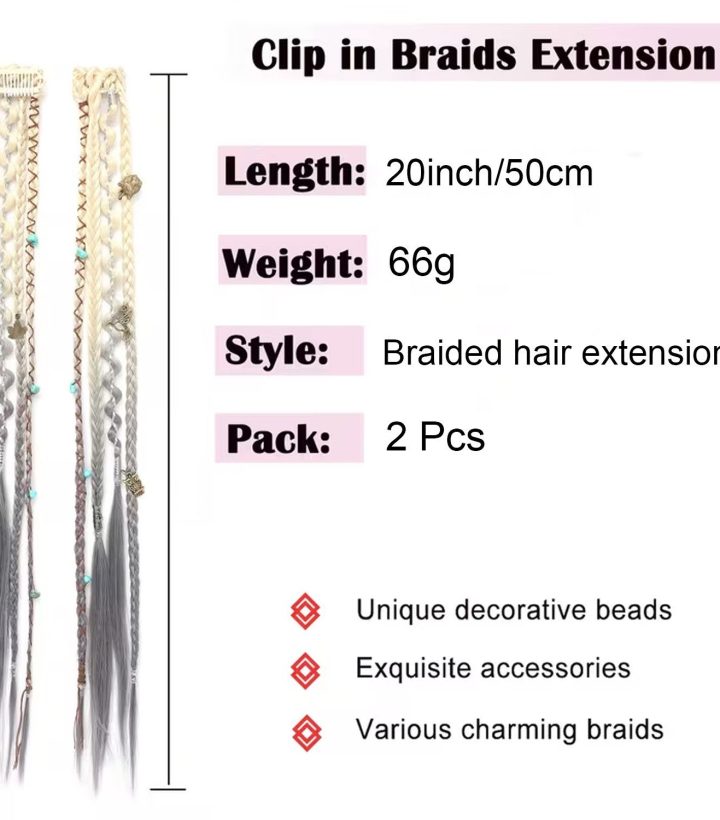
For the Blonde Beaded Mixed-Braid Clip-In Extension Pair (NS-EX-039), the seller artwork shows 20 inches / 50 cm and the seller title gives 16 inches. The two lengths differ by four inches. Before using either in an order, ask the supplier to identify the offered option and send a ruler photo showing the measuring points, from the attachment to the end being measured.
A catalog example: an afro puff with unconfirmed dimensions
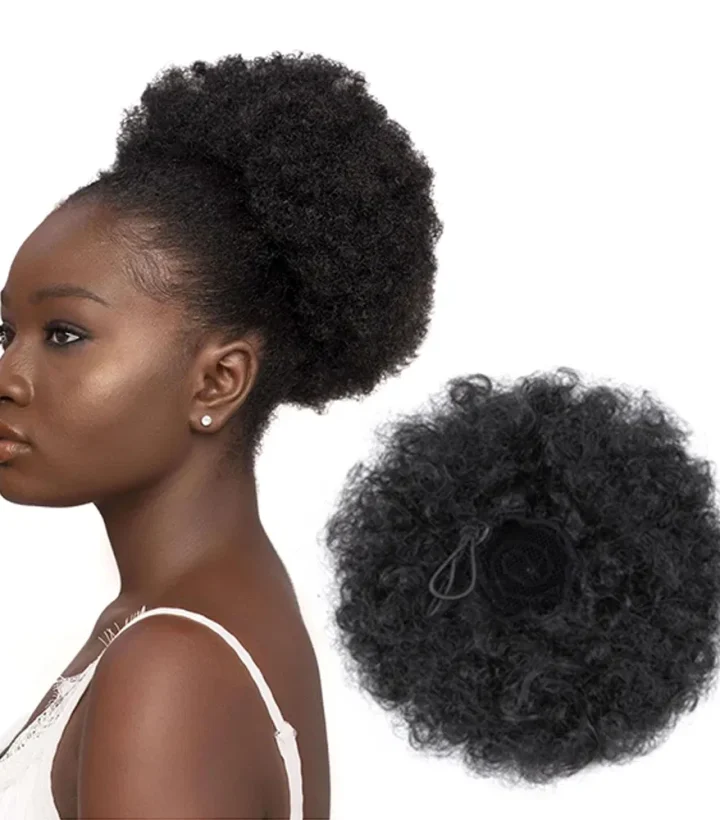
The HB-002 Fine-Texture Round Afro Puff, NS-PN-053, is shown as a rounded puff, but its current product page does not publish a verified overall diameter, height, strand length or attachment-base size. A recorded HB-002 model specification lists 8-inch hair; that does not establish the overall diameter or base size of the fine-texture option pictured here. Ask whether the hair length is measured along an extended strand or in the relaxed curl, and request this selected item’s dimensions before comparing it with another style.
For a purchase comparison, request a product-specific measurement view that identifies the start and end points. The model’s own hair and the way the piece is arranged can affect the appearance of a wearing photograph, so do not estimate a numeric size against the model’s face.
Compare straight, wavy and curly options on the same basis
A photograph of a curl does not reveal whether the stated length was taken along an extended strand or as the hanging hairstyle. Ask for the method for each selected SKU. There is no universal conversion ratio that can reliably turn a listed curly length into a finished hanging length for every product.
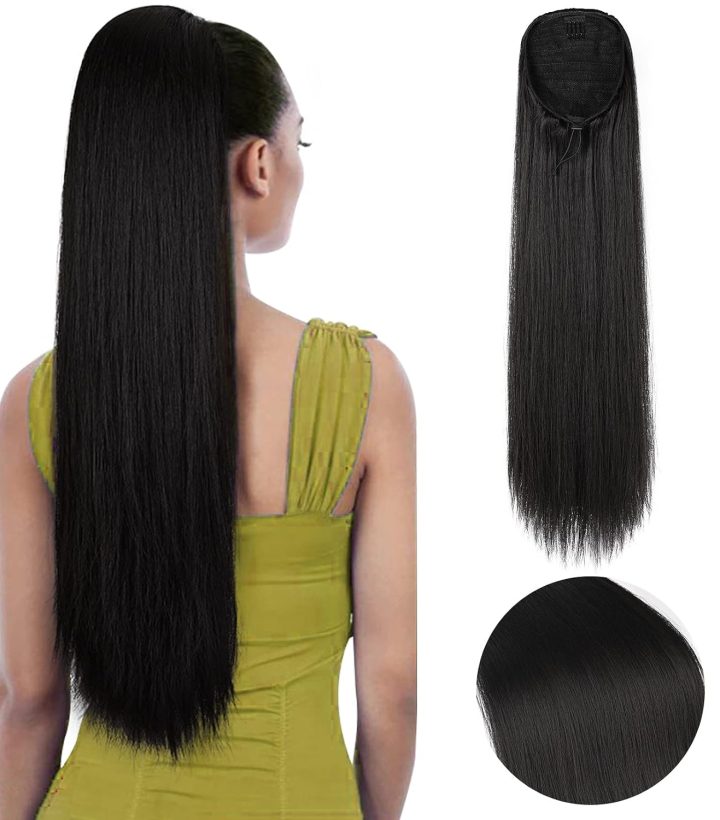
For example, DPST58, NS-PN-034, has a listed 28-inch option. That identifies the catalog option; it does not by itself document the seller’s start point, endpoint or measuring tension. Confirm those points if a precise finished length matters to your assortment.
Should you measure a curly drawstring ponytail relaxed or stretched?
Record both measurements when ordering. The relaxed length tells you how far the curls hang, and the gently stretched length helps you compare the strands against a supplier’s listed length. Use the same attachment point and hair tips for both readings, and ask the supplier which method the listing uses.
The supplier lists 12 inches for the SP-039 coiled puff (NS-PN-051). For the pictured 4# Dark Brown option, request two ruler photos of the same piece, with the coils resting naturally in one and gently stretched in the other. Measure from the attachment to the tips in both photos and ask which reading corresponds to the listed 12 inches.
Use the measurement record for the product type
For a crown or parting piece, continue with the hair topper base coverage and clip placement guide to compare the support area and fixing positions. For a multi-piece extension set, use the clip-in set specification guide to record each weft’s width, clips and length method separately. Keep each record tied to its own SKU and selected option.
For a full wig, use the wig cap size and lace measurement guide to record head circumference, front-to-back and ear-to-ear readings. Keep any lace-panel width and depth separate from those head measurements; a lace label such as 13×4 does not establish the cap’s fit range.
For the CI-020 braided headband with blunt fringe (NS-EX-033), request two ruler photos. Measure the center fringe from the seam where the hair meets the band to the tips, with the fringe lying flat. For the band, ask for the straight-line distance between its ends while it rests unstretched. Record the two measurements separately and label the pictured shade on both photos.
Build a measurement record before comparing quotes
- Copy the exact product name, SKU and page URL.
- Record only the currently listed option you are considering.
- Label each number: hair length, base width, base depth, overall width or overall height.
- Keep the original unit beside any conversion.
- Ask for a measurement photograph identifying the start and end points on that item.
- Record unresolved details as unconfirmed, rather than filling them from a similar product.
If the text and a measurement diagram disagree, ask which is correct before using either in an order reference. Keep both records until the discrepancy is resolved. An approximate dimension should remain approximate; extra decimal places from a unit conversion do not make the original measurement more precise.
To shortlist more than one product type, browse the hairpieces catalog and record the same measurements for each SKU.
What should go into the inquiry?
Open the selected product page and use its SKU-specific WhatsApp inquiry button. Include the quantity and destination country, then state the measurement you need clarified. For example: “For this listed SKU, does the stated length refer to extended hair or the finished hanging shape? Please identify the measuring points.” Ask separately about current availability and any existing-item sample terms.
Browse the ponytail extension category to shortlist actual styles, or use WhatsApp inquiry if you need help with a specific listing. A dimension comparison is a selection aid, not a guarantee of fit or current stock.