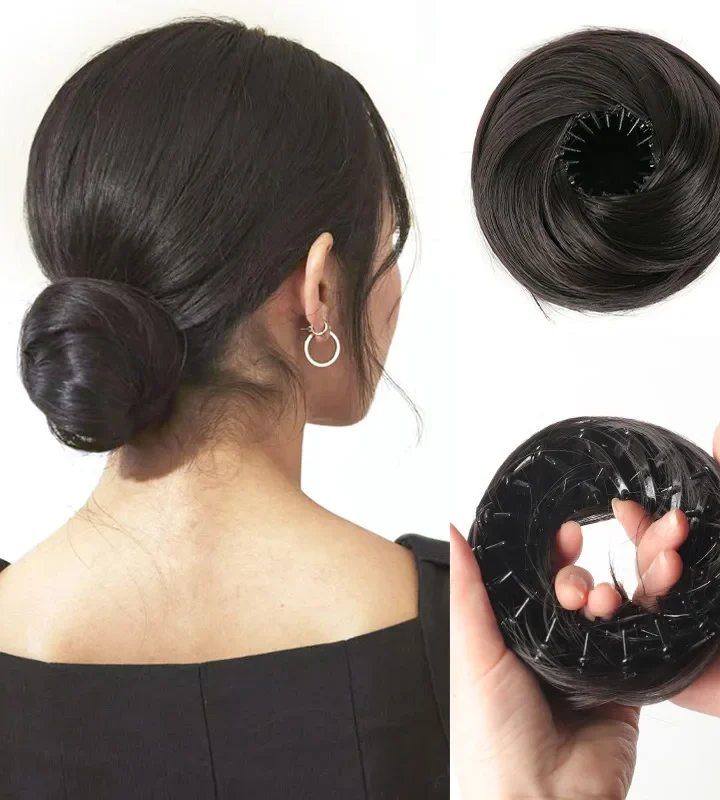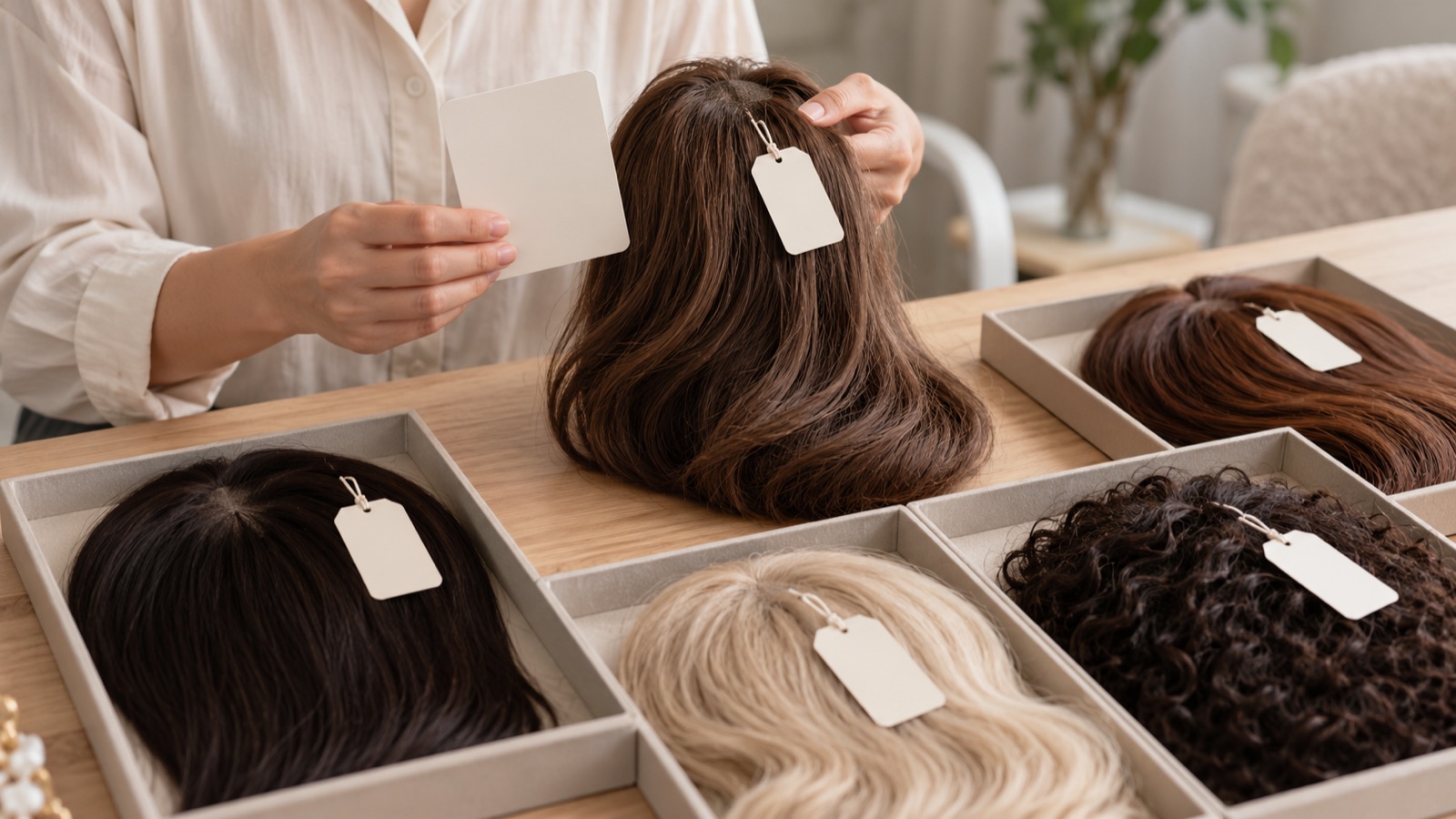
Conceptual illustration; not a photo of YUKI stock, a customer order, or a listed SKU.
When several hairpiece samples are reviewed together, keep each physical item connected to its own product reference. A name such as “black bun” is too broad for a useful review record. Use a separate sample ID alongside the catalog SKU, so a photograph or comment can be traced back to the exact piece on your desk.
This is a suggested recordkeeping workflow for samples you have actually received. It does not imply that a sample has been tested by YUKI or that any particular sample is currently available. Confirm sample availability and terms before ordering.
Separate the catalog SKU from your sample ID
The catalog SKU identifies the listed style. Your sample ID identifies a particular received piece. Two samples carrying the same SKU may have different receipt dates or selected options, so do not use the SKU alone as a label for both.
For example, the catalog page for Natural Black Smooth Hair-Circle Bun, NS-BN-003, provides a product reference. If you receive a sample of that item, you could assign your own ID, such as REVIEW-01, while keeping NS-BN-003 in a separate field. REVIEW-01 is an illustrative buyer reference, not a YUKI SKU or a record of an actual shipment.
Create one record before separating the contents
Open and document one sample pack at a time. Keep the original label and pack together until you have recorded their relationship to the product. Put your sample ID on a separate card or storage label rather than altering the hairpiece.
- Identity: sample ID, catalog SKU, product name and product URL.
- Option: the selected existing option exactly as confirmed, plus any label actually received.
- Receipt: receipt date and the relevant order or sample reference.
- Contents: the pieces and accessories actually present, kept separate from what was expected.
- Evidence: filenames for the pack label, complete contents and individual item views.
- Open question: the discrepancy or missing confirmation, who should clarify it and the response date.
Copyable record line: Sample ID: ___ | SKU: ___ | Confirmed option: ___ | Received date: ___ | Contents observed: ___ | Open question and photo filename: ___
Use “not confirmed” when a record is missing. A shade name remembered from a conversation is not a substitute for the selected option recorded with the sample.
Keep photographs and review comments attached to the same item
Include the sample-ID card in a reference photograph and use that ID at the start of each filename. Photograph the pack label separately if it contains personal delivery details; share only the information needed to identify the item.
If multiple people review samples, ask them to write the sample ID beside every observation. “The attachment is different” is difficult to investigate without knowing which received piece and which agreed reference were compared. Record the observed difference and its photograph, rather than replacing the expected specification with a guess.
What if a label is missing or two samples become mixed?
Mark the identity as unresolved and keep the affected items separate from confirmed references. Compare their original packaging, receipt record and photographs. Ask for clarification using those records. Similar color or shape alone should not determine which SKU to assign.
For checking what a pack should contain, use the bun pack-contents and sample review checklist. This labeling workflow keeps the evidence organized; it does not replace product inspection or establish material, dimensions or performance.
Turn the record into a specific product question
Return to the exact product page and use its WhatsApp inquiry button. Include the product name, SKU, URL and your sample ID, then describe the one detail needing clarification. Add the relevant photograph and dated confirmation reference without unnecessary personal information.
When you are ready to buy the same item again, use the hairpiece reorder checklist with your saved sample ID, SKU and option. Ask the supplier to confirm the current pack contents and attachment details against that record.
Browse existing bun and updo styles if you need another listed option. Keep each alternative under its own SKU and sample record. An organized sample record helps explain a question; it does not confirm current availability or settle quotation and order terms.